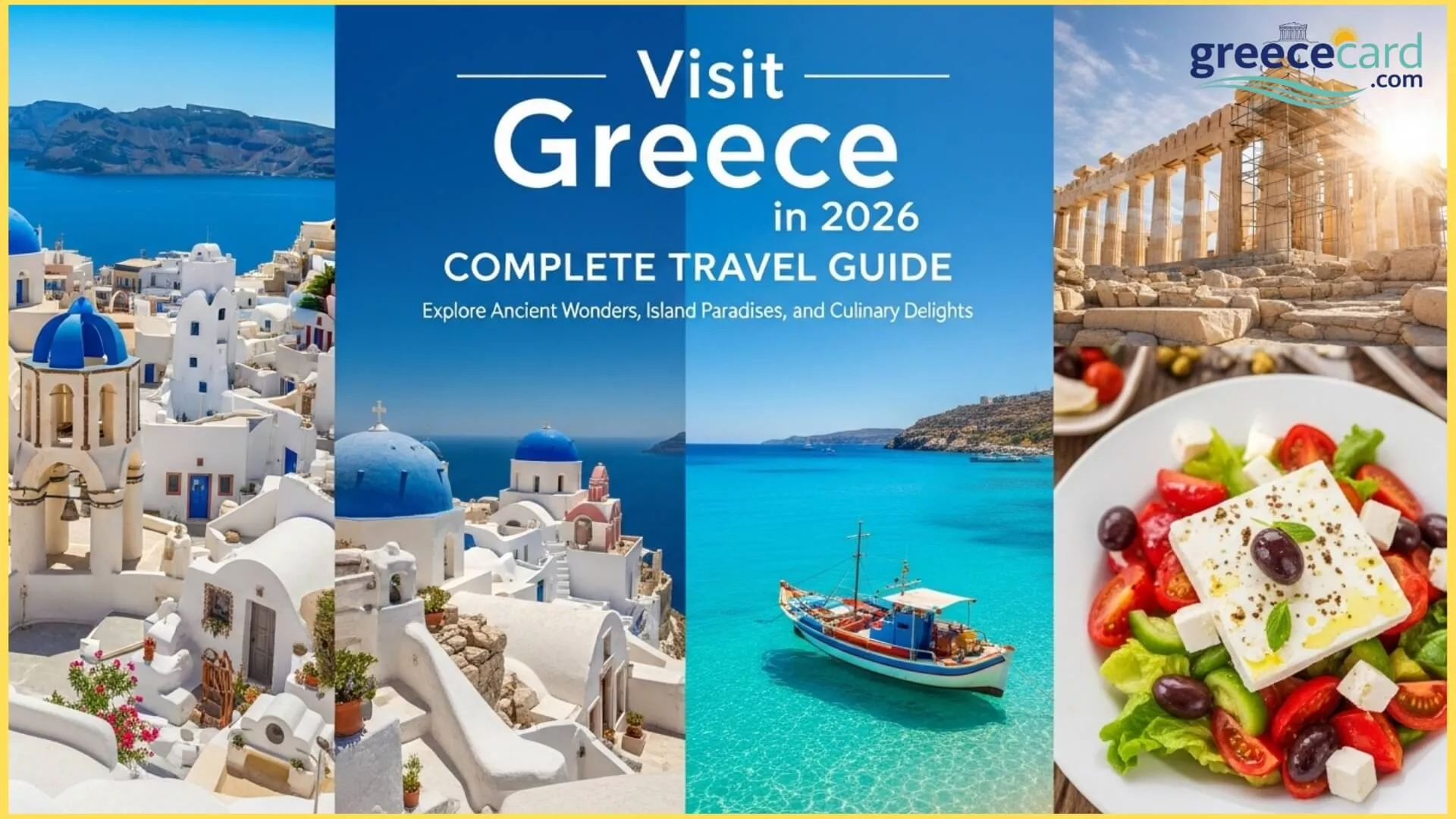
Visit Greece in 2026: Complete Travel Guide
Thinking about Greece for 2026? Great choice. Whether you’re dreaming about ancient ruins, island hopping, or just eating your weight in moussaka, Greece has got you covered. Let me walk you through everything you need to know to make it happen.
Introduction to Greece in 2026
Greece is absolutely crushing it in 2026. The country is expecting a record-breaking summer with loads of new flight routes from the Middle East, Africa, Central Europe, and the Balkans. They’re not just bringing in more tourists – they’re focusing on quality tourism, sustainability, and spreading visitors beyond the usual hotspots.
This guide is for everyone: first-timers trying to figure out where to start, couples looking for romance in Santorini, families wanting kid-friendly beaches, and even digital nomads searching for their next base with killer views.
Why Visit Greece in 2026
Cultural Heritage and Ancient History
Greece basically invented Western civilization, so yeah, the history here is pretty intense. We’re talking about the Acropolis, ancient theaters, temples, and archaeological sites that’ll make your history teacher proud.
Beautiful Islands and Mainland Diversity
You’ve got over 200 inhabited islands to choose from, plus a mainland packed with mountains, monasteries, and medieval towns. Whether you want party vibes, quiet beaches, or hiking trails, there’s an island (or ten) for that.
Mediterranean Cuisine and Local Traditions
Greek food is legendary. Fresh seafood, slow-cooked stews, olive oil on everything, and wine that flows like… well, wine. Plus, the locals are genuinely welcoming – Greek hospitality (philoxenia) is a real thing.
Improved Infrastructure and Sustainable Tourism
Greece is serious about sustainability now. New environmental standards for hotels, regulated short-term rentals, and a push for year-round tourism instead of just summer madness. They’re even promoting mountain tourism and eco-friendly options like glamping.
Best Time to Visit Greece in 2026
Here’s the breakdown by season:
Spring (April-June): Probably the sweet spot. Temperatures are mild (19-29°C), flowers are blooming, fewer crowds, and the weather is perfect for sightseeing. May is particularly brilliant.
Summer (July-August): Peak season. Hot (28-32°C), crowded, expensive, but perfect for beaches and island life. Athens can be “impossibly hot and oppressive” in summer, so fair warning.
Autumn (September-October): Another fantastic time. Still warm (20-28°C), the sea’s lovely, crowds are thinning out, and prices drop. September is ideal.
Winter (November-March): Mild on the coast (10-15°C), snowy in the mountains. Great for cultural city breaks, winter sports, and avoiding tourists completely. Just know that many island hotels and restaurants close during the winter.
Cheapest time? November through March, avoiding Christmas and Easter. But honestly, shoulder seasons (April-May and September-October) give you the best balance of good weather and reasonable prices.
Entry Requirements and Travel Essentials
Passport and Visa Requirements
Greece is part of the Schengen Zone, which means most tourists can stay up to 90 days within any 180 days.
EU/EEA citizens: Just need a valid ID card. Easy.
UK citizens and many others: No visa needed for short visits, but you’ll need ETIAS (European Travel Information and Authorization System) starting in 2026 – it’s a quick online pre-screening.
Non-EU travelers needing a visa: You’ll need to apply for a Schengen visa through the Greek embassy. Requirements include a valid passport (6 months validity), a completed visa form, proof of accommodation, round-trip tickets, proof of funds, and travel insurance covering €30,000 in medical expenses.
Your passport must be valid for at least 3 months after you leave the Schengen Area and issued within the last 10 years.
Travel Insurance
Get it. It’s mandatory for Schengen visa applications anyway (minimum €30,000 coverage), and honestly, you don’t want to deal with medical emergencies abroad without insurance.
Health and Safety
Greece is generally very safe for tourists. Standard precautions apply – watch your belongings in crowded tourist areas, don’t leave valuables on the beach, that sort of thing.
Top Destinations to Visit in Greece
Athens
The capital and your likely entry point. The Acropolis is the obvious must-see – that iconic hilltop with the Parthenon. But Athens has loads more: the Acropolis Museum, the Ancient Agora, Plaka neighborhood (the old town), and fantastic street food.
Flight connectivity to Athens is strong in 2026, especially from the US.
Greek Islands
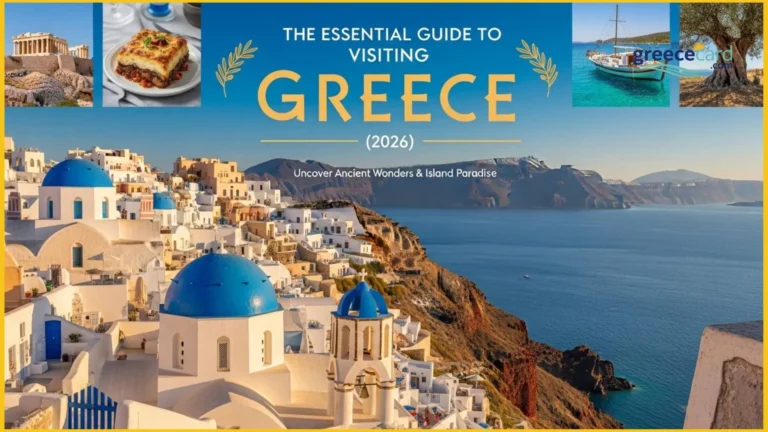
Santorini: The poster child of Greece. White-washed buildings, blue domes, and incredible sunsets from Oia. It’s romantic, stunning, and yes, very touristy. But there’s a reason everyone goes.
Mykonos: Party central. Beautiful beaches by day, legendary nightlife by night. Think beach clubs, DJ sets, and a see-and-be-seen vibe.
Crete: The biggest island. You get Minoan history (Knossos Palace), gorgeous beaches, mountain hiking (Samaria Gorge), and authentic Cretan culture. It’s massive, so you could spend weeks here.
Rhodes: Medieval old town (UNESCO site), ancient ruins, great beaches. A mix of history and beach time.
Corfu: Green and lush, Venetian influence, beautiful coastline. More relaxed vibe.
Zakynthos: Famous for Navagio Beach (Shipwreck Beach) – that postcard-perfect cove with the rusty ship.
Naxos: Less touristy than Mykonos or Santorini, beautiful beaches, charming villages, good food scene.
In 2026, there’s expanded access to islands like Mykonos and Skyros with new flight routes.
Mainland Greece
Meteora: Mind-blowing monasteries perched on top of massive rock pillars. Seriously, it looks like something from a fantasy film.
Delphi: Ancient sanctuary and archaeological site. Once considered the center of the world in Greek mythology.
Thessaloniki: Greece’s second city. Great food scene, Byzantine walls, vibrant nightlife, and a more authentic, less touristy feel than Athens.
Peloponnese: The big peninsula south of Athens. Packed with ancient sites (Olympia, Mycenae, Epidaurus), beach towns, and mountain villages.
Destinations like Kalamata are getting more flight connections in 2026, making the Peloponnese easier to reach.
Things to Do in Greece
Historical and cultural experiences: Explore ancient ruins, visit museums, attend traditional festivals, watch Greek folk dancing, and visit monasteries.
Beach and island hopping: Rent a boat, take ferries between islands, try different beaches (sandy, pebbly, secluded, organized), and snorkel in crystal-clear waters.
Food and wine experiences: Take cooking classes, do wine tours (especially in Santorini or Peloponnese), visit olive oil farms, and eat at family-run tavernas.
Outdoor adventures: Hike the Samaria Gorge in Crete, sail around the islands, scuba dive, try windsurfing or kitesurfing, rock climb at Kalymnos.
Festivals and events: Greece’s tourism strategy now emphasizes year-round activities and cultural events. Check local calendars for food festivals, religious celebrations, and cultural events throughout 2026.
Greece Travel Costs and Budget Planning
Let’s talk money. Greece is pretty affordable compared to most of Europe, but costs vary wildly depending on where you go and how you travel.
Average daily costs:
Breaking it down:
Accommodation:
- Budget hostels/guesthouses: $15-45 per night
- Mid-range hotels: $50-100 per night
- Upscale hotels/resorts: $150+ per night
Food:
- Budget (street food, bakeries): $15-25 per day
- Mid-range (tavernas, casual restaurants): $30-50 per day
- Upscale dining: $60-100+ per day
Transportation:
- Local buses: $1-3 per ride
- Ferry tickets: $10-70 depending on route and speed
- Domestic flights: $30-100+
- Car rental: $30-60 per day
Trip totals:
- 7-day trip: $1,400-3,700 per person
- 10-day trip: $1,800-4,800 per person
- 14-day trip: $2,000-6,000 per person
Athens and Santorini are the most expensive. Smaller islands and mainland towns are more affordable.
Where to Stay in Greece
Hotels and resorts: From budget chains to luxury beachfront resorts. Booking.com and Hotels.com are your friends. Greece is seeing new hotel investments in both Athens and Thessaloniki in 2026.
Vacation rentals and villas: Airbnb is huge in Greece, though regulations are getting stricter to balance tourism growth. Great for families or longer stays.
Hostels: Plenty of budget-friendly hostels, especially in Athens, Thessaloniki, and popular islands. Social atmosphere often includes breakfast.
Best areas:
- Athens: Stay in Plaka, Monastiraki, or Syntagma for easy access to sights
- Santorini: Oia for sunsets (pricey), Fira for central location, or quieter villages like Imerovigli
- Mykonos: Mykonos Town for nightlife, other areas for beach access
- Crete: Chania or Rethymno for charming old towns, Heraklion for central location
Getting Around Greece
Domestic flights: Aegean Airlines and Sky Express connect Athens with major islands and cities. Quick but can be pricey in peak season. Useful for covering big distances fast.
Ferries: The backbone of island hopping. Multiple companies operate routes: Blue Star Ferries, Hellenic Seaways, Dodekanisos Seaways, and others. Ferries leave mainly from Athens ports – Piraeus (the main one), Rafina, and Lavrion.
You’ve got regular ferries (slower, cheaper) and fast ferries/catamarans (quicker, pricier). Most routes run year-round, but less frequently in winter. Book tickets online in advance during summer, or just rock up to the port for off-season travel.
Public transportation: Athens has a good metro, buses, and trams. Other cities have local bus networks. Cheap and reliable.
Car rentals: Great for exploring mainland Greece or larger islands like Crete. Roads are generally decent. You’ll need an international driving permit. Watch out for aggressive Greek driving and narrow village streets.
Greek Food and Drink Guide
Alright, let’s talk about the good stuff.
Traditional dishes:
Moussaka: Layered eggplant, spiced meat (usually lamb or beef), potatoes, and creamy béchamel sauce on top. It’s comfort food perfection.
Souvlaki: Grilled meat skewers, often served in pita with tomatoes, onions, and tzatziki. The ultimate Greek street food.
Tzatziki: Yogurt, cucumber, garlic, and olive oil. Sounds simple, is simple, tastes amazing.
Greek salad (Horiatiki): Tomatoes, cucumber, olives, feta, olive oil. Skip the lettuce – that’s not traditional.
Gyros: Similar to souvlaki, but the meat’s cooked on a vertical rotisserie. Wrapped in pita, loaded with fixings.
Spanakopita: Spinach and feta pie wrapped in crispy phyllo pastry.
Regional specialties: Each area has its own dishes. Crete’s got dakos (barley rusk with tomatoes and feta). The islands have amazing fresh seafood. Northern Greece has more Balkan influences.
Drinks:
Wine: Greece has been making wine for 4,000 years. Try Assyrtiko from Santorini (crisp white) or Agiorgitiko from the Peloponnese (smooth red).
Ouzo: Anise-flavored spirit. Drink it with water (it turns milky white) and meze (small dishes).
Greek coffee: Strong, served in tiny cups with foam on top. Order it sweet (glykos), medium (metrios), or no sugar (sketos).
Frappe: Iced instant coffee. Greece runs on this stuff in summer.
Greece Travel Tips for 2026
Cultural etiquette: Greeks are warm and hospitable. Greet people with “Yassas” (hello). Dress modestly when visiting churches and monasteries (cover shoulders and knees). It’s polite to finish your meal – leaving food can be seen as wasteful.
Tipping: Not mandatory but appreciated. Round up for taxis, leave 5-10% in restaurants if the service was good. Table service might include a small cover charge (couvert).
Language basics: Most people in tourist areas speak English. Learning a few Greek phrases helps, though: “Efharisto” (thank you), “Parakalo” (please/you’re welcome), “Signomi” (excuse me).
Safety: Greece is very safe. Petty theft happens in crowded tourist spots, so watch your stuff. Some neighborhoods in Athens can be dodgy at night, but violent crime against tourists is rare.
Avoiding scams: Watch for overpriced taxis (insist on the meter), restaurant touts in touristy areas (check menus before sitting), and “gifts” from street vendors (nothing’s free).
Sustainable and Responsible Travel in Greece
Greece is taking sustainability seriously now, with new environmental standards and a focus on quality over quantity.
Eco-friendly accommodations: Look for hotels with environmental certifications. Greece is pushing eco-friendly options like glamping for mountain tourism.
Supporting local communities: Eat at family-run tavernas, buy from local markets, stay in locally-owned guesthouses, and book tours with local guides.
Protecting sites: Don’t touch ancient ruins, don’t remove stones or artifacts, stay on marked paths, respect “no photography” signs in museums.
Sustainable island tourism: Avoid single-use plastics, use reef-safe sunscreen, respect marine life when swimming or diving, and visit lesser-known islands to reduce overtourism pressure on hotspots.
Greece is actively promoting lesser-known regions and trying to distribute tourists more evenly across the country and throughout the year.
Sample Greece Itineraries
7-Day Greece Itinerary
Days 1-3: Athens (Acropolis, museums, neighborhoods)
Days 4-5: Santorini (caldera views, wine tours, beaches)
Days 6-7: Mykonos (beaches, nightlife, Delos day trip)
10-Day Greece Itinerary
Days 1-3: Athens
Day 4: Day trip to Delphi or overnight in Meteora
Days 5-7: Crete (Heraklion, Knossos, Chania)
Days 8-10: Santorini
14-Day Island Hopping Itinerary
Days 1-2: Athens
Days 3-5: Naxos
Days 6-8: Paros
Days 9-11: Santorini
Days 12-13: Mykonos
Day 14: Return to Athens
Athens + Islands Travel Plan
Days 1-3: Athens
Days 4-6: Hydra or Aegina (nearby Saronic islands for a different vibe)
Days 7-10: Santorini or Crete
Visiting Greece with Family, Couples, or Solo
Family-friendly destinations: Crete is brilliant for families – beaches, easy hikes, interactive museums. Rhodes has water parks and beaches. Naxos is laid-back with sandy beaches. Corfu has green landscapes and calm waters.
Romantic getaways: Santorini is the obvious one – sunset dinners, cave hotels, wine tours. Milos and Folegandros are quieter romantic alternatives. Nafplio in the Peloponnese is charming for couples.
Solo travel: Greece is great for solo travelers. Join group tours, stay in hostels to meet people, or just enjoy wandering ancient sites alone. It’s safe, people are friendly, and you’ll never feel awkward eating alone – tavernas welcome everyone.
Honeymoon in Greece: Santorini and Mykonos are honeymoon classics. Consider adding a quieter island like Sifnos or Milos. Splurge on a cave hotel with a private plunge pool. Book sunset sailing tours.
FAQs
Is Greece expensive to visit in 2026?
Not really. It’s more affordable than most of Western Europe. Budget travelers can get by on $30-50 per day, mid-range travelers $50-100. Santorini and Mykonos are pricier, but mainland Greece and smaller islands are quite reasonable.
Is Greece safe for tourists?
Yes, very safe. Petty theft can happen in crowded tourist areas, but violent crime is rare. Standard travel precautions apply. The tourism infrastructure is well-developed, and tourists are well-looked after.
How many days are enough in Greece?
Minimum 7 days to get a taste (Athens plus one or two islands). 10-14 days is ideal for proper island hopping or combining islands with mainland sites. You could easily spend 3+ weeks and still not see everything.
Do you need a visa for Greece?
Depends on your nationality. EU/EEA citizens just needan ID. UK citizens and many others don’t need a visa for stays under 90 days, but will need ETIAS authorization starting in 2026. Check specific requirements for your country.
2026 is shaping up to be an incredible year for Greece. New flight routes, improved infrastructure, a focus on sustainability, and the same timeless combination of history, beaches, and amazing food that’s been drawing travelers for decades.
The key is to book early – especially for peak summer months (July-August) – and consider visiting during shoulder seasons for better weather, fewer crowds, and lower prices. Don’t just stick to Santorini and Mykonos. Explore lesser-known islands, venture into mainland Greece, and support local communities.
Greece has something for everyone: history buffs, beach lovers, foodies, party animals, families, couples, and solo travelers. It’s affordable, safe, beautiful, and welcoming. What are you waiting for? Start planning your Greek adventure for 2026.