Greece Festivals 2026: Month-by-Month Guide
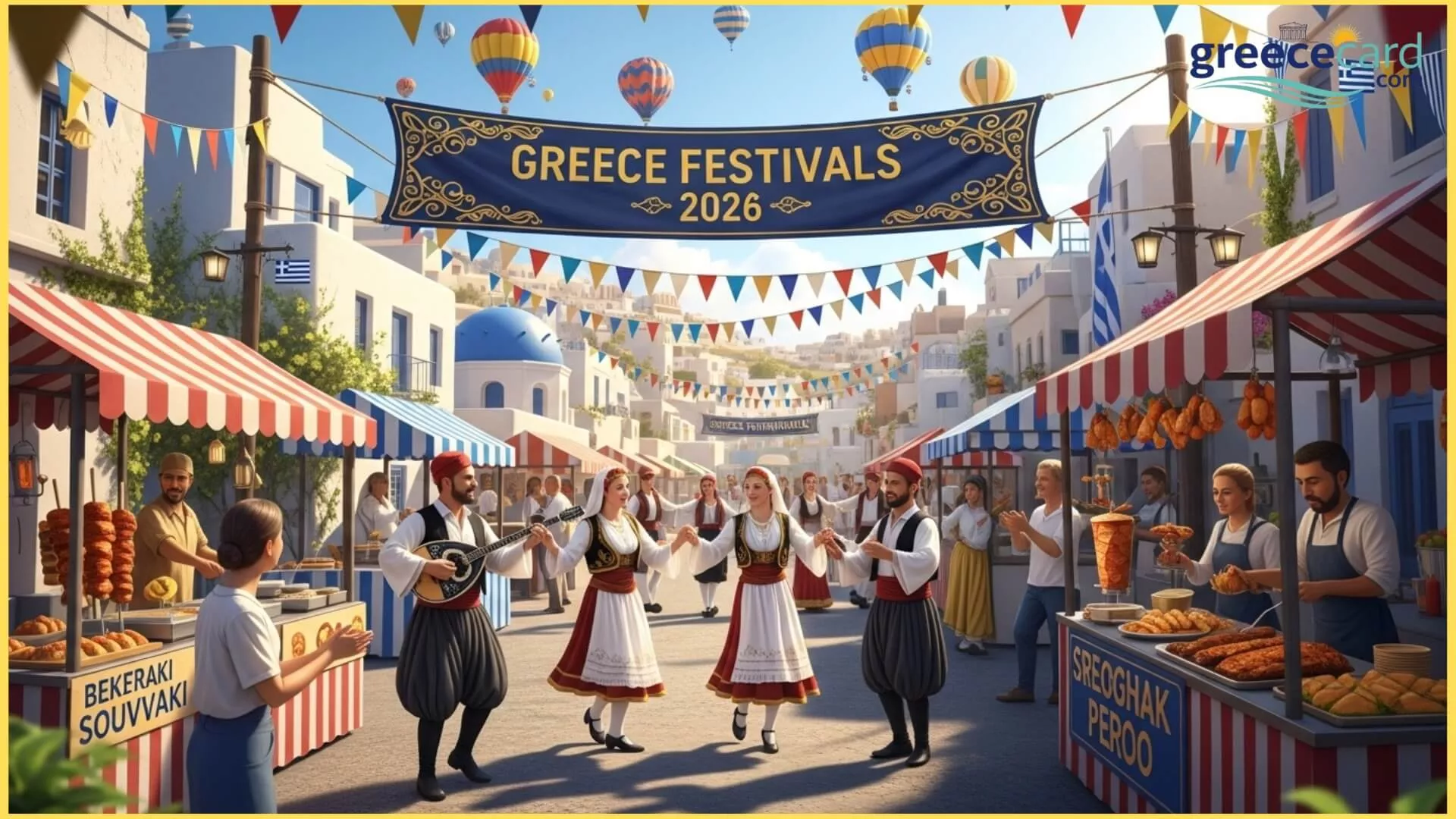
Planning a trip to Greece in 2026? You’re in for a treat. This country doesn’t just do festivals – it basically celebrates everything from ancient traditions to modern music blowouts all year long. Greeks take their festivals seriously (the food, the dancing, the staying up until dawn), and honestly, timing your visit around one of these celebrations might be the best travel decision you’ll make.
This guide breaks down what’s happening month by month, so you can pick your vibe – whether you want massive street parties, religious pilgrimages, ancient theatre under the stars, or electronic music festivals by the beach.
January: Starting the Year Greek Style
January kicks off with New Year’s Day (Protochronia) on January 1st, where families gather for special meals and the traditional Vasilopita cake. There’s a coin hidden inside, and whoever finds it supposedly gets good luck all year (no pressure).
Epiphany (Theophania) on January 6th is way more interesting than it sounds. Priests throw a cross into the sea or a lake, and brave locals dive into freezing water to retrieve it. The person who catches it gets blessed for the year. You’ll find this happening in coastal towns all over Greece – Piraeus and Thessaloniki put on particularly good shows.
The Patras Carnival actually starts in mid-January (January 17, 2026) and runs all the way through February. It’s Greece’s biggest carnival, so if you’re around, definitely check it out. More on that below.
January weather is chilly and sometimes rainy, so pack layers. The upside? Way fewer tourists and lower prices.
February: Carnival Season Goes Wild
February is all about Apokries – the Greek carnival season. Think costumes, parades, street parties, and a whole lot of ouzo. The Patras Carnival reaches its peak with the massive Grand Parade on February 22, 2026. Over 50,000 people in costumes parade through the streets, and it ends with burning the Carnival King effigy on the pier with fireworks. It’s basically Greece’s answer to Rio.
Don’t miss Tsiknopempti (Grilling Thursday), which falls during carnival season. This is literally a day dedicated to grilling meat everywhere – restaurants, homes, streets. The smell of barbecue fills entire neighborhoods. It’s delicious chaos.
The weather’s still cool but starting to warm up. Bring a light jacket and comfortable shoes because you’ll be on your feet a lot during carnival.
March: Independence and Flying Kites
Clean Monday (Kathara Deftera) falls on February 23, 2026, marking the end of carnival and the start of Lent. Greeks head outdoors for picnics with vegetarian food (no meat allowed during Lent). The big tradition? Flying kites. Seriously, the sky fills with colorful kites everywhere from Athens to tiny villages. It’s weirdly beautiful and fun.
Greek Independence Day on March 25th is huge. This celebrates Greece breaking free from Ottoman rule in 1821. Expect military parades in Athens and Thessaloniki, with troops, tanks, and fighter jets doing flyovers. Schools close, Greek flags are everywhere, and the Acropolis Museum offers free entry. The parade in Athens starts at 11 AM from Syntagma Square – get there by 10 AM if you want a good spot.
March weather is unpredictable but generally pleasant. Spring flowers start blooming, making it gorgeous for sightseeing.
April: Easter Everything
Greek Orthodox Easter is THE biggest deal in Greece, and in 2026 it falls on April 12th. This is not like Western Easter – it’s an entire week of traditions, candle-lit processions, midnight church services, and feasting that would make any foodie weep with joy.
Holy Week (the week before Easter) builds up intensity each day. Good Friday features solemn processions with flower-decorated epitaphs carried through streets. Holy Saturday night, everyone gathers at midnight for the Resurrection service with candles, fireworks, and literally explosions in some places. Then comes the feast – roasted lamb, red eggs, tsoureki bread, and endless family gatherings on Easter Sunday.
Each region has unique customs. Athens and the islands offer different but equally amazing experiences. Just know that everything shuts down during Holy Week, so plan accordingly.
April weather is lovely – warm but not hot, perfect for exploring.
May: Flowers and Early Festivals
May Day (Protomagia) on May 1st is all about flowers. Greeks traditionally make wreaths from wildflowers and hang them on their doors. Many head to the countryside for picnics and nature walks. It’s also Labor Day, so expect closures.
This is when cultural and music festivals start ramping up. The weather’s perfect for outdoor events, and islands begin their festival seasons. Beaches are warming up but not yet crowded – honestly, May might be the perfect month to visit Greece.
June: Ancient Drama Comes Alive
The Athens & Epidaurus Festival kicks off in June and runs through August. This is Greece’s premier cultural festival, featuring opera, dance, music, and – most incredibly – ancient Greek tragedies performed in actual ancient theatres. Watching Sophocles at the ancient theatre of Epidaurus under the stars is genuinely mind-blowing. The acoustics are so perfect you can hear a pin drop from the top row.
The Miaoulia Festival in Hydra (June 27) celebrates Greek naval history with fireworks and reenactments. Release Athens Festival (June 21-25) brings major international rock, indie, and electronic acts to the seafront.
June weather is ideal – warm, sunny, and perfect for both beach and culture. Book festival tickets and accommodation early because they sell out.
July: Island Parties and Music Festivals
July is festival overload in the best way. Every island has panigyria – local village festivals celebrating patron saints with food, dancing, and live music. These aren’t tourist shows; they’re real community celebrations where locals dance traditional dances until sunrise.
The Cretan Diet Festival in Rethymno celebrates Cretan cuisine. Olympus Festival brings performances to ancient Olympia. EJEKT Festival (July 14-26) at Athens’ Olympic Stadium features 20 years of major international music acts.
July is peak summer – hot, crowded, and expensive. But the energy is unmatched. Book everything in advance and embrace the chaos.
August: The Holiest Month
August 15th – Assumption of the Virgin Mary – is THE biggest religious holiday after Easter. The island of Tinos becomes Greece’s pilgrimage center, with thousands traveling to worship the miraculous icon. The procession is incredibly moving, with pilgrims crawling on their knees to the church. Even if you’re not religious, the cultural significance is powerful.
Paros and Crete also have major celebrations. Expect island-wide festivals, fireworks, feasts, and basically everything closed on the 15th.
Athens & Epidaurus Festival continues with performances. Music festivals are everywhere. Colour Day Festival transforms Athens’ Olympic Stadium into a massive dancing rainbow with synchronized color powder throws.
August is the hottest, most crowded, most expensive month. But also the most vibrant. Stay hydrated and book way ahead.
September: Wine Time
September is when things calm down and get civilized again. Grape harvest festivals happen across wine regions. Vineyards open for tours, tastings, and celebrations of the year’s vintage. It’s basically wine nerd heaven.
Food festivals continue, religious commemorations happen in various towns, and the weather mellows to perfection. September might be the best-kept secret for visiting Greece – still warm enough for beaches, fewer crowds, better prices, and locals are more relaxed after the August madness.
October: History and Chestnuts
Ohi Day on October 28th commemorates Greece saying “No” (Ohi) to Mussolini’s ultimatum in 1940. Military and student parades fill the streets, with the biggest in Athens and Thessaloniki. Schoolkids march in uniforms, the military shows off, fighter jets fly overhead, and patriotic pride is off the charts. Many museums and archaeological sites offer free entry.
Chestnut festivals in mountain villages celebrate the autumn harvest with roasted chestnuts, raki (local spirit), and traditional music. The vibe is cozy and authentically local.
October weather is mild and pleasant – ideal for exploring without sweating through your shirt.
November: Marathon and Culture
The Athens Marathon (November 8, 2026) follows the original route from the town of Marathon to Athens’ Panathenaic Stadium. Even if you’re not running, watching thousands finish in the ancient marble stadium where the first modern Olympics happened is pretty epic.
Religious observances and local fairs continue. November is genuinely off-season, meaning deals on accommodation and fewer tourists. The weather’s cooler but still fine for sightseeing. Museums and archaeological sites are blissfully uncrowded.
December: Greek Christmas Vibes
Greek Christmas is different from Western versions but equally charming. Kalanda are traditional carols sung by children going door-to-door. Christmas trees and decorations appear, but it’s less commercialized than in many places.
Christmas markets pop up in Athens and other cities. New Year’s Eve is actually bigger than Christmas, with fireworks, parties, and the Vasilopita cake tradition again.
December weather is cool and sometimes rainy. Perfect for cozy tavernas, hot wine, and exploring cities without the crowds. Many islands close down for winter, so stick to Athens, Thessaloniki, and mainland destinations.
Festival Highlights You Shouldn’t Miss
If you can only hit a few festivals, prioritize these:
- Greek Orthodox Easter (April 12) – The most important cultural experience
- Athens & Epidaurus Festival (June-August) – Ancient theatre at its finest
- Patras Carnival (January-February) – Greece’s biggest party
- Assumption Day in Tinos (August 15) – Powerful pilgrimage experience
- Ohi Day (October 28) – Patriotic celebrations and free museum entry
For music lovers, Release Athens, EJEKT Festival, and Colour Day Festival bring world-class acts. First-timers should catch Easter or Independence Day for authentic Greek culture.
Travel Tips for Festival-Goers
Booking: Reserve accommodation and festival tickets months ahead for major events like Easter, August 15th, and summer music festivals. Greeks book their holiday homes early, and hotels fill fast.
Festival etiquette: At religious festivals, dress modestly (cover shoulders and knees). Be respectful during processions and church services. At panigyria, locals will pull you into the dancing – just go with it. No one cares if you don’t know the steps.
What to wear: Comfortable walking shoes are non-negotiable. Greek festivals involve a LOT of standing and walking. Layer for spring and fall. Summer festivals get hot, so breathable fabrics and sunscreen are essential. Bring something nice for evening performances at the Athens & Epidaurus Festival.
Transportation: Trains and buses add extra services during major festivals but also get packed. Book intercity travel early. In Athens during parades, expect road closures and metro crowding. Plan extra time to get anywhere on Easter weekend and August 15th.
Festival FAQs
Are festival dates the same every year?
Nope. Most Greek festivals follow the Orthodox calendar or lunar cycles, so dates shift annually. Easter moves around a lot. Always check specific 2026 dates before booking.
Do I need tickets?
For cultural performances (Athens & Epidaurus Festival, concerts), yes – book in advance. Music festivals require tickets that sell out. Most religious festivals, parades, and panigyria are free and open to everyone.
Which festivals are free?
Religious celebrations (Easter, Epiphany, Assumption Day), national holidays (Independence Day, Ohi Day), panigyria, local village festivals, and parades don’t cost anything. Many museums offer free entry on national holidays.
Best month for festivals?
April for Easter traditions, August for island celebrations and music festivals, or June-July for a mix of culture and perfect weather. Honestly depends on what you’re after – religious traditions, music, food, or ancient theatre.
Why 2026 Is Your Year for Greek Festivals
Greece in 2026 offers the full festival experience – from solemn religious traditions dating back centuries to massive electronic music festivals that rival anything in Europe. The country knows how to celebrate, and locals genuinely welcome visitors who want to join in.
Plan your trip around at least one major festival. Time it with Easter and you’ll see Greece at its most authentic. Hit the summer festivals and you’ll party like the ancient Greeks (minus the togas). Visit during quieter months and you’ll catch local celebrations tourists never see.
Just remember: Greeks don’t do festivals halfway. Come ready to eat too much, dance until sunrise, and experience traditions that have survived thousands of years. Your 2026 Greece trip is calling – make it unforgettable.