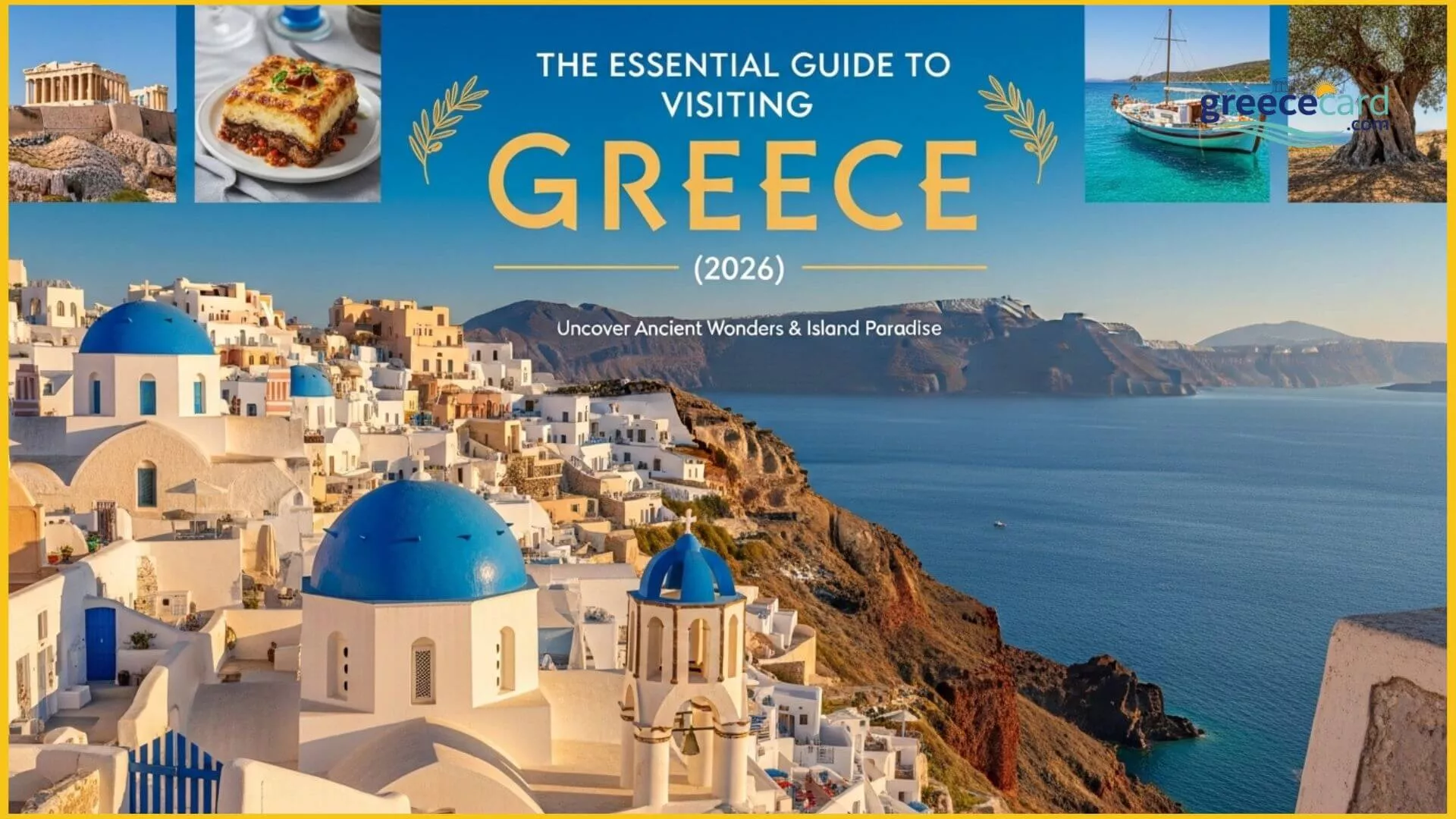
The Essential Guide to Visiting Greece (2026)
So Greece has been the answer to “where should I go in Europe?” for decades, and honestly, 2026 is no different. It just broke tourism records again. The country is actively upgrading airports, metro lines, and roads, and every year, more people discover that a week here is never quite enough.
Whether you’re a first-timer trying to figure out where even to start, a couple looking for romantic sunsets, a family needing beaches + culture, or just someone who wants incredible food and a sea that’s actually warm — this guide has you sorted.
Where is Greece, and why does everyone love it?
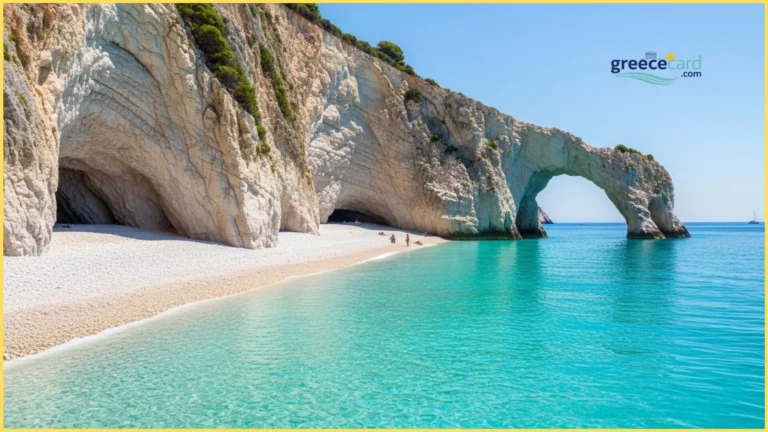
Greece sits at the bottom of the Balkans in Southern Europe, surrounded by the Ionian Sea, Aegean Sea, and Mediterranean. Over 6,000 islands. 250+ days of sunshine per year. Ancient ruins that predate basically everything. And a food culture that’ll ruin every meal you eat at home.
That combination of history + beaches + warmth + food + island-hopping freedom is genuinely hard to replicate anywhere else in Europe. It’s the whole package.
Best time to actually go
Spring (April–June) — the sweet spot
Mild weather, wildflowers, fewer crowds, and Santorini actually feel manageable. Samaria Gorge in Crete opens from May. Best overall timing, no debate.
Summer (July–August) — peak everything
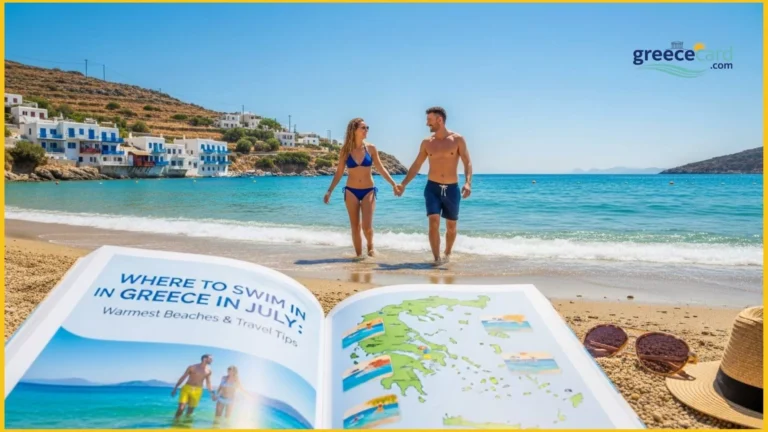
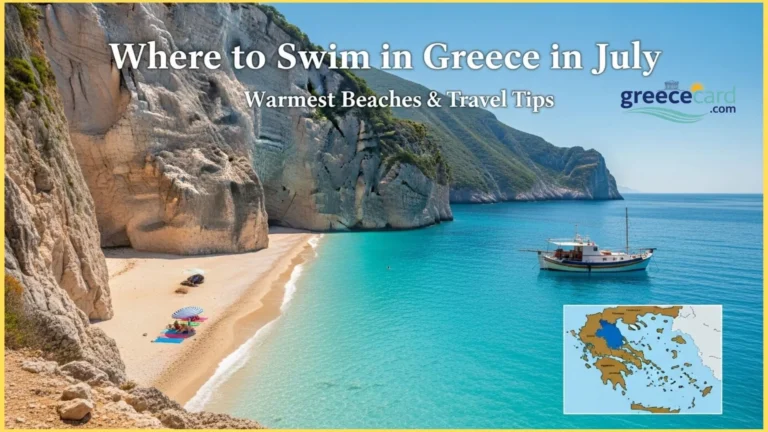
Best beaches, best nightlife, most energy. Also most expensive, hottest, and busiest. If you go in summer, book everything months in advance — hotels and ferries both fill up fast.
Fall (September–October) — excellent choice
SThe seais still warm from summer, crowds thin out, prices drop. Harvest season = amazing food. All the good stuff, fewer of the annoying bits. Highly underrated.
Winter (November–March) — quiet but worth considering
Athens and Thessaloniki are great for city breaks, museums, and food without the crowds. Beach islands go quiet, but Greece is pushing hard for year-round tourism, so there’s more to do than ever.
Top places to visit
Athens — give it more than one day
Athens is usually the starting point,t and most people rush through it to get to the islands. That’s a mistake. Yes, it’s busy and chaotic, but it’s also got some of the most significant ancient sites on Earth,th plus a surprisingly good food and nightlife scene.
Do this:
Acropolis + Parthenon — touristy, yes. Worth it, absolutely. Do it early morning to beat the heat and crowds.
Acropolis Museum — genuinely interesting, not just dusty old stuff.
Plaka neighborhood — old town wander + souvlaki + bakery stops.
Athens nightlife — a proper going-out scene that surprises almost everyone.
2026 upgrade note: Athens metro is expanding, and there’s now a tram line extension to Piraeus port, making ferry connections way easier. The old Ellinikon airport site is also being transformed into a massive park and leisure complex. The city is levelling up.
Santorini — yes, it’s as good as the photos
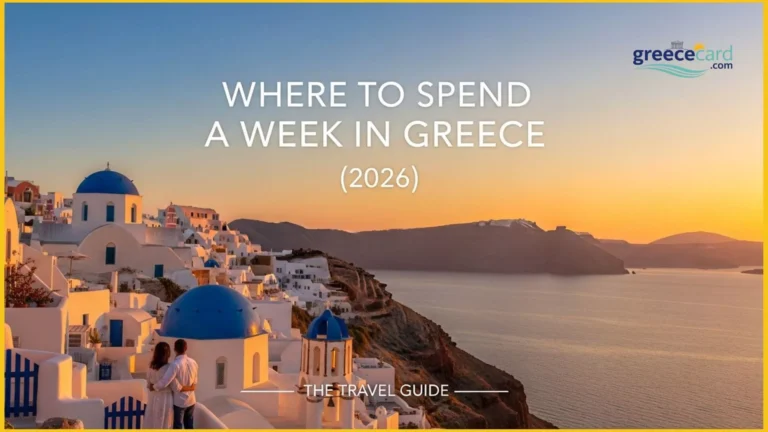
White and blue buildings on volcanic cliffs, caldera views, sunsets in Oia that make grown adults emotional. It’s the Greece you’ve seen on every screensaver,r and it looks exactly like that in real life, which is rare.
Do the caldera sailing cruise (worth every cent).
Oia sunset: arrive early or prepare to stand behind 400 other people.
Wine tasting: Santorini’s volcanic soil makes an incredible local white wine calleAssyrtikoko.
Budget warning: Cave hotels start around €200/night in peak season and go way up from there.
Mykonos — party island with a gorgeous face
Mykonos delivers exactly what it promises: beach clubs (Scorpios, Nammos), DJ sets until sunrise, boutique hotels, designer shops, and one of the most LGBTQ+-friendly atmospheres in the Mediterranean. Mykonos Town (the Chora) with its windmills and white lanes is stunning — just visit in the morning before the crowds arrive. Even more expensive than Santorini in summer, so go in with eyes open.
Crete — the island that genuinely has everything
Greece’s biggest island is kind of unfairly stacked. Pink sand beaches at Elafonissi, Minoan ruins at Knossos, the dramatic Samaria Gorge hike (open May–Oct ), charming Chania Old Town with its Venetian harbour, mountain villages, and a food culture that takes itself seriously.
You could spend a whole week just on Crete and not feel shortchanged. Honestly ideal if you don’t want to pack/unpack four times. Road infrastructure is being upgraded in 2026, which makes exploring the island easier than ever.
Rhodes — medieval city meets beach holiday
Rhodes Old Town is a UNESCO-listed medieval walled city that looks like a film set. Lindos village has whitewashed houses climbing a cliff, ancient ruins on top, and a gorgeous bay at the bottom. Beaches are excellent. Great value compared to Santorini/Mykonos. Best pick for families and history lovers.
Meteora
This is the wild card recommendation. Meteora is a series of Byzantine monasteries perched on top of enormous sandstone rock pillars in central Greece. It looks absolutely unreal — like something out of a fantasy novel — and yet it’s a real place you can visit.
Practical tips:
Six monasteries to visit; each closes one weekday, all open weekends.
Dress code is strict: shoulders and knees covered. Women need a skirt — most monasteries lend them at the entrance.
St. Stephen’s nunnery is the most accessible (flat paths, no steep stairs).
Holy Trinity has the most dramatic view,ws but 140+ steps to get there.
Best base is Kalambaka town below the rocks — stay there and day-trip up.
The Greek islands quick cheat sheet
Greece groups its islands into clusters, and each has a different personality:
Cyclades (Santorini, Mykonos, Naxos, Paros, Milos): The classic postcard islands. Most popular, best for island hopping.
Dodecanese (Rhodes, Kos, Patmos): Historical, close to Turkey, excellent beaches.
Ionian Islands (Corfu, Zakynthos, Kefalonia): Lush + green, less crowded than Cyclades, beautiful coves.
Sporades (Skiathos, Skopelos): Forested, quieter, great for nature lovers.
Saronic Gulf Islands (Aegina, Hydra, Spetses): Easy day trips from Athens if time is tight.
Island hopping tips
Follow the ferry routes logically — Greek ferries run like sea subway lines; don’t try to force connections that don’t flow naturally.
Classic Cyclades loop: Athens → Mykonos → Naxos/Paros → Santorini (or reverse).
Paros → Naxos: about 30 minutes by ferry. Ridiculously easy.
Book ferries ahead in summer — they genuinely sell out.
Entry requirements + visa stuff (2026 version)
EU/EEA citizens: No visa. Walk on in.
US, UK, Canada, Australia + most others: Greece is Schengen — you get 90 days in any 180 days without a visa.
ETIAS: The EU’s new digital pre-travel authorisation for visa-exempt travelers is coming — expected later in 2026, but no confirmed mandatory date yet. Check closer to your trip.
Passport validity: Must be validfor at least 3 months after your Schengen departure.
Travel insurance: Strongly recommended and required for Schengen visa applicants — minimum €30,000 medical coverage.
Currency: Euro (€). Simple.
Getting around
Ferries: The soul of Greek travel. High-speed = fast but pricier. Blue Star = slower but comfier and cheaper. Book ahead in summer.
Domestic flights: Fast (Athens → Santorini is 45 min ) but luggage fees add up.
Car rental: Essential for Crete, Rhodes, and Naxos. Not needed for Athens, Santorini, or Mykonos Town.
Athens metro + tram: Reliable, being expanded. New tram to Piraeus port makes ferry days easier.
What things actually cost
Real talk:
| Budget type | Daily cost (per person) | 7-day rough total |
|---|---|---|
| Budget backpacker | €80–€100/day | ~€700–€900 |
| Mid-range traveler | €140–€220/day | ~€1,200–€1,800 |
| Luxury | €400–€500+/day | €3,000–€4,000+ |
Money-savers: Visit in shoulder season (May–June or September), eat at local bakeries and tavernas away from the seafront, use ferries instead of flights for short hops, try Naxos or Paros instead of Santorini/Mykonos for dramatically better value.
Sample itineraries (quick version)
7 days, first trip:
Days 1–3 Athens → Days 4–7 Santorini
10 days, island hopper:
Days 1–2 Athens → Days 3–4 Mykonos → Days 5–6 Naxos → Days 7–8 Paros → Days 9–10 Santorini
14 days, the proper adventure:
Days 1–3 Athens → Day 4 Meteora → Days 5–8 Crete → Days 9–10 Santorini → Days 11–12 Paros/Naxos → Days 13–14 Mykonos
Food you absolutely must eat
Don’t just order “Greek salad + souvlaki” from the tourist menu and call it a day. Actual must-tries:
Souvlaki/gyros from a proper local souvlatzidiko (not a square tourist restaurant).
Moussaka — Greece’s great comfort food.
Horiatiki (Greek salad) — no lettuce, just tomatoes, cucumber, olives, onion, slab of feta, olive oil. Dangerously good.
Fresh grilled octopus + seafood at a seaside psarotaverna. Do this at least once.
Spanakopita/tiropita from a bakery for breakfast. Cheap, amazing.
Loukoumades — fried honey dough balls. Your diet officially ends here.
Assyrtiko wine from Santorini. Ouzo with seafood, once, because you have to.
Real tips (the ones you actually need)
Greeks eat late. Dinner before 9 pm is slightly weird. Just go with it.
Tipping: Not mandatory like in the US, but 5–10% at restaurants is appreciated.
English: Widely spoken everywhere tourists go. Learn “efharisto” (thank you) — it gets you genuine smiles.
Heat in July–August: Serious. Outdoor activities in the morning/evening, midday siesta like a local.
Monasteries: Cover shoulders + knees, speak quietly, follow the rules. These are active religious places, not just Instagram stops.
Summer bookings: 3–6 months ahead for Santorini/Mykonos. Not an exaggeration.
SIM cards: Buy at the airport or phone shops. Local SIM = cheap data = easy maps.
FAQs
Is Greece expensive in 2026?
Depends completely on where you go. Santorini/Mykonos in August = yes, very. Naxos/Paros in September = surprisingly reasonable.
Is Greece safe?
Very. Low violent crime, tourist-friendly infrastructure, and English spoken everywhere. Normal city awareness applies; nothing to stress about.
How many days do you need?
7 days for a solid first trip. 10–14 to properly island-hop. You could spend a month and still have a list.
Do people speak English?
Yes, comfortably everywhere tourists go.
What currency?
Euro (€). Cards are widely accepted. Carry some cash for smaller islands and local markets.
Greece rewards people who plan a little and then let go. The best meals always come from sitting down at a random waterfront taverna and ordering whatever the owner suggests. Go, swim as much as possible, eat everything, and stop rushing.